
You come home after a long day to find the back door propped open, a window unlatched and a power tool missing from the hallway. Renovation work changes who comes and goes from your home, and the security that worked before the project often fails once walls, doors and locks are being moved around. Most homeowners only think about it after something has gone missing, so it is worth planning ahead.
Check Your Locks Before the First Trade Arrives
Walk through the property before any work starts and test every lock, latch and window catch. Note which exterior doors have multi-point locking and which rely on a single cylinder, and check for worn or loose cylinders. Older houses can also hide structural and wiring problems behind the plaster, so read our guide to renovating an older home safely before you settle the layout.
Tell Your Insurer and Check Who Is Covered
Standard home insurance often leaves out damage caused by building work, so a repair linked to the project may not be paid for. Ageas’s renovation insurance guide explains when you need to tell your insurer about building work. Tell your insurer before work begins and ask whether your cover continues while the house is under works. Expect questions about the cost, how long the job will run and whether your builder carries their own liability insurance. Failing to declare structural work can also put a policy at risk, which is one of the costly things people forget when renovating their home.
Control Keys and Contractor Access
Keep a written note of every key or code you hand over, who holds it and when it comes back. If a subcontractor leaves the job or a builder changes, collect the key or change the code. Agree simple site rules: who can enter, at what times, and who locks up at the end of the day. On a long project, consider changing the locks once the work is finished so no old keys remain in circulation.
Protect Scaffolding, Openings and Temporary Doors
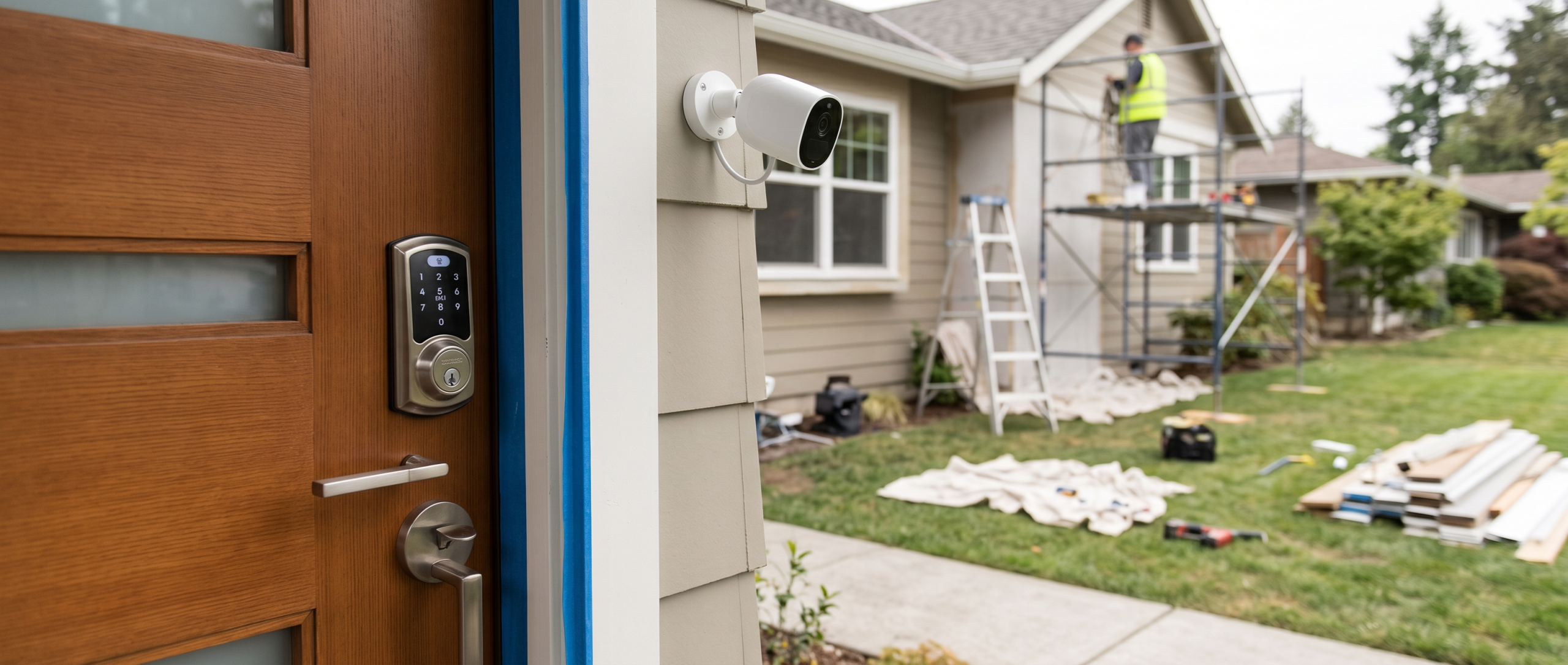
Scaffolding gives thieves a route to upper-floor windows, balconies and roof spaces, so check that any alarm or camera coverage reaches those points. Open wall cavities, missing windows and temporary doors left overnight are direct entry points too. Ask your contractor exactly how each gap will be closed at the end of every day, and agree who checks it. Side gates and back doors often get propped open for convenience, so agree that they stay shut whenever no one is working in that area.
Keep Your Alarm Working When the Layout Changes
Moving walls, doors or flooring can knock motion sensors out of line and misalign magnetic door contacts, which causes false alarms or gaps in cover. Speak to your alarm company before work starts and ask about temporary zone bypasses rather than switching the whole system off. Tell decorators not to paint over or cover smoke and motion sensors. While the walls are open, plan cabling for CCTV, smart locks and sensor lighting.
Secure Tools, Materials and Skips
Power tools and copper pipe left out overnight are an easy target. Ask builders to store high-value tools in a locked container or take them off site each evening. Time deliveries close to installation rather than stockpiling expensive materials for weeks. Skips can draw people looking for scrap metal, so keep the area tidy and in view. During heavy demolition, move heirlooms, jewellery, passports and cash to a safe place away from the site.
Plan for Lost Keys and Lockouts
Lost keys, damaged locks and accidental lockouts are more likely when doors are propped open and keys change hands. Keep a spare set with someone outside the project, and save the number of a reliable emergency service before work begins. If a lock fails out of hours, a 24-hour locksmith such as Barry Bros can be called to attend, so keep their details to hand for the length of the project.
Keep the House Secure Until the Last Trade Leaves
The day the renovation finishes should not be the first time you test your locks. Once the final tradesperson has gone, check every door, window and alarm zone, collect any keys still in circulation, and confirm the alarm is armed and working. That way, the home you walk back into is the one you left behind.